
Science-Backed Strategies to Improve Brain Health

We make plans for many aspects of our future, such as our finances, physical health, and even our appearance. Yet one of our most important assets often gets overlooked: our brain health.
Brain health underpins memory, thinking, and independence, and the choices we make each day have a major impact on how well it is maintained over time. Despite growing evidence that lifestyle can protect cognition, many people underestimate its importance, largely because of two common misconceptions.
The first misconception is the belief that dementia is an inevitable part of aging. Dementia is not a universal consequence of aging. Many people remain cognitively healthy into late life, and research shows that the changes leading to dementia can begin decades before symptoms appear, making prevention a central focus.
Another common misconception is the belief that genetics fatefully determines whether someone will develop dementia. While certain genes increase risk, they do not seal your fate. Research suggests that lifestyle changes can significantly lower the risk or delay the onset of dementia. Building on this, the 2024 Lancet Commission identified 14 modifiable risk factors that could account for almost 45% of dementia cases (Livingston et al., 2024), highlighting how addressing these risks could be key to prevention.
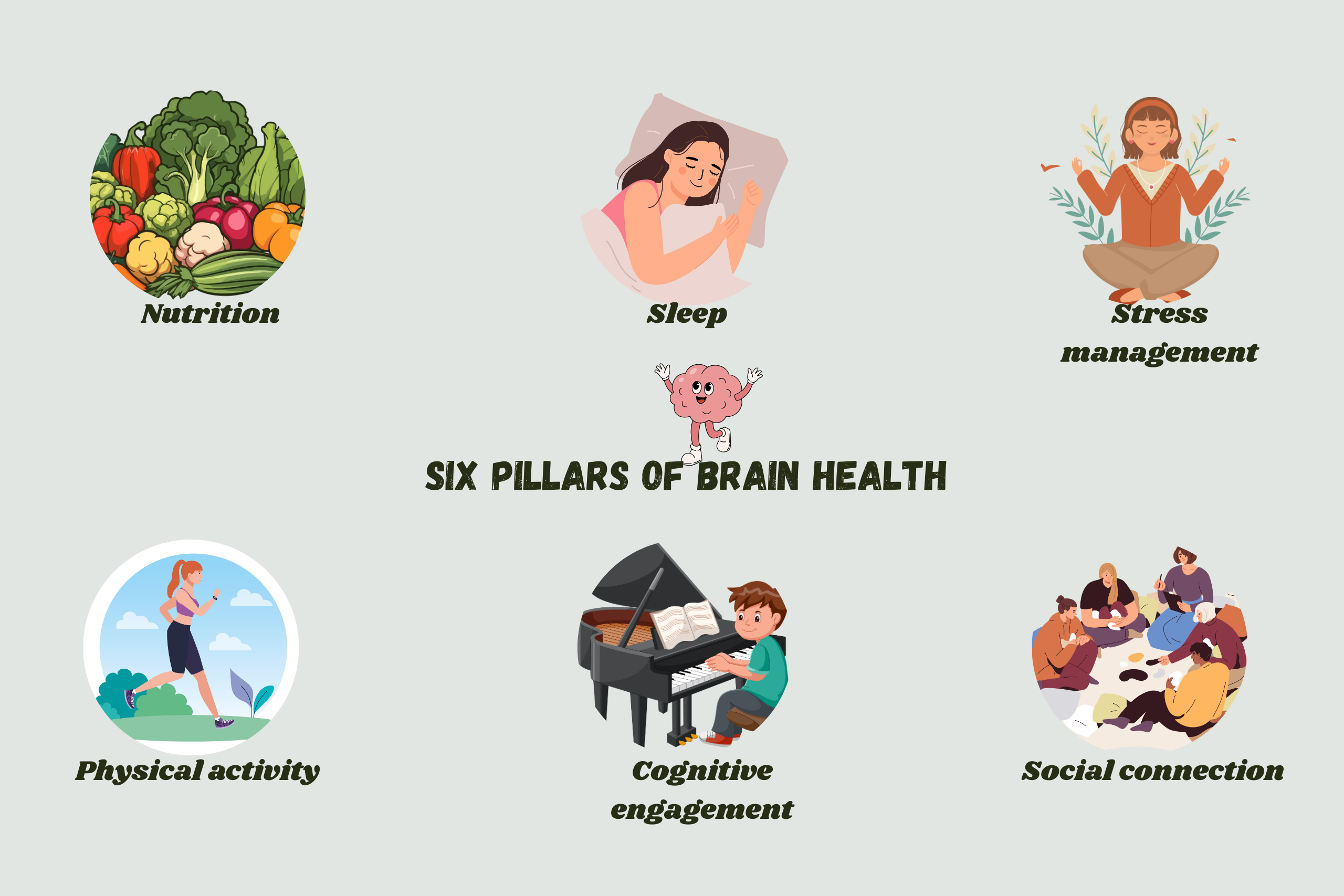
The encouraging message is that everyday choices matter. Six areas in particular—Nutrition, Physical activity, Cognitive engagement, Social connection, Sleep, and Stress management—are consistently linked with brain health. Each factor contributes on its own, but their combined effect is stronger. In a large study, adopting two to three healthy habits reduced the risk of Alzheimer’s disease by 37%, while following four or five habits lowered it by 60% (Dhana et al., 2020; Rush Alzheimer’s Prevention News, 2020).
This article examines each of these areas with evidence-based strategies. While no plan can guarantee prevention, the research provides practical ways to reduce risk and support long-term brain health.
Nutrition
Growing evidence shows that diet plays a pivotal role in protecting the brain against cognitive decline and dementia. A pattern rich in whole, unprocessed, plant-based foods supports long-term cognitive function, and three dietary approaches stand out in research:
- Mediterranean diet – emphasizes fruits, vegetables, legumes, nuts, whole grains, olive oil, moderate dairy, and limited red meat and sweets.
- DASH diet (Dietary Approaches to Stop Hypertension) – highlights plant-based foods, lean proteins, low sodium, and minimal saturated fats.
- MIND diet (Mediterranean-DASH Diet Intervention for Neurodegenerative Delay) – combines elements of both the Mediterranean and DASH diet, but places special focus on leafy greens and berries, foods consistently linked to better brain health. It also discourages high intake of fruits, dairy products, potatoes, or frequent fish meals.
Evidence backs up the benefits of these dietary patterns. Long-term adherence to the DASH diet was linked to better cognition even in people carrying the APOE ε4 gene, the strongest inherited risk factor for late-onset Alzheimer’s (Berendsen et al., 2017). In another study, those following the MIND diet had a 53% lower risk of Alzheimer’s, and even moderate adherence reduced risk by 35% (Morris et al., 2015). Adding colour to your plate matters too. A “rainbow diet” rich in diverse fruits and vegetables has also been tied to slower cognitive decline (Yeh et al., 2021).
Translating this evidence into everyday practice means drawing on the MIND pattern as a foundation, prioritizing plant-based foods and healthy fats while limiting those that have been shown to increase risk. Adding variety by eating the rainbow and keeping portions balanced further supports brain health. Using food intentionally, not just out of habit or indulgence, can make a meaningful difference over time.
Physical activity
Exercise is widely known to benefit the heart, but its role in protecting the brain is equally important. Many cardiovascular risk factors, such as high LDL cholesterol, hypertension, obesity, and diabetes, are also risk factors for cognitive decline. Research shows that regular physical activity lowers the risk of dementia, including Alzheimer’s disease.
A 2006 prospective study of older adults found that exercising three or more times per week was associated with a 32 % lower chance of developing dementia compared with less active peers (Larson et al., 2006). In 2011, a meta-analysis reported that high levels of physical activity reduced the risk of cognitive decline by 38 percent, while even moderate levels reduced the risk by 35 % compared with sedentary individuals (Sofi et al., 2011). Most recently, data from nearly 90,000 adults using wearable trackers showed that just 35 minutes of moderate-to-vigorous activity per week was associated with a 41 % lower risk of dementia, and higher activity levels within the study’s ranges were linked to progressively greater protection (Wanigatunga et al., 2025).
Applying this evidence starts with making movement a consistent part of life. Choosing activities you genuinely enjoy helps exercise feel sustainable rather than a chore. Social dimensions can add further value, whether through group classes, gyms, accountability partners, or nature walks that combine physical and mental benefits. For those with medical concerns, it is best to seek guidance from a healthcare provider to identify safe and effective options.
Stress Management
Stress is an essential survival response, but when it becomes prolonged, it harms both body and brain. Chronic stress disrupts multiple systems and is linked to cardiovascular disease, anxiety, depression, and cognitive decline.
Studies show that older adults reporting higher levels of perceived stress perform worse on cognitive testing and decline more quickly over time (Aggarwal et al., 2014). A meta-analysis also found that higher stress was associated with increased risk of mild cognitive impairment (a precursor to dementia) as well as dementia itself (Franks et al., 2021). Stress across the lifespan also plays a role. A 38-year longitudinal study in Gothenburg found that psychosocial stressors in midlife were linked to a higher risk of dementia later in life, particularly Alzheimer’s disease. Findings from another large, diverse cohort confirmed the association between perceived stress and cognitive impairment. Importantly, this association did not vary by age, race, or sex (Kulshrestha et al., 2023).
The encouraging news is that stress is modifiable. Evidence supports the use of practices such as meditation, yoga, Tai Chi, and Qigong for reducing stress and enhancing overall well-being. Trait mindfulness has also been linked to slower cognitive decline and fewer Alzheimer’s-related brain changes, even among people with a family history of the disease. Broader concepts, such as resilience and spiritual fitness, may also contribute to stress reduction and enhance overall well-being.
Cognitive Engagement
Just as the body benefits from exercise, the brain stays healthier when it is regularly challenged. Several studies suggest that mentally stimulating activities help lower the risk of cognitive decline and dementia. This is thanks to a concept called cognitive reserve, which refers to the brain’s ability to compensate for damage and continue functioning, even when neuropathological changes are present. People with high cognitive reserve, often through higher levels of education, can resist clinical symptoms longer despite underlying Alzheimer’s pathology (Livingston et al., 2024; Hoenig et al., 2017).
Formal education isn’t the only path, though. Mentally stimulating activities, such as reading, writing, playing music, or even board games, have been shown to support brain health. Observational studies indicate that people who regularly engage in such activities experience slower decline and remain better able to cope even when Alzheimer’s pathology is present.
Further research has reinforced these findings; a meta-analysis of 19 international studies reported that participation in cognitive leisure activities lowers the risk of dementia and cognitive impairment (Verghese et al., 2003). More recent data confirmed that leisure activities were associated with reduced risk of all-cause dementia, Alzheimer’s disease, and vascular dementia (Su et al., 2022).
Your job can help too. Careers that demand problem-solving, social interaction, or complex decision-making support cognitive reserve. A well-known example is London taxi drivers. Training for “The Knowledge” requires memorizing thousands of city routes, a substantial effort that has been associated with larger gray matter volume in the posterior hippocampus (a brain area crucial for spatial navigation), compared to bus drivers who follow static routes (Maguire et al., 2006).
Putting this research into practice means making room for regular mental challenges, whether through learning, creative hobbies, or problem-solving at work. Integrating these activities helps strengthen cognitive reserve and supports sharper cognition for longer, even as the brain ages.
Sleep
Quality sleep isn’t just about feeling rested; it’s critical for brain health. A 2017 meta-analysis of 27 studies found that people with sleep problems, such as too little or too much sleep, poor quality, insomnia, or sleep apnea, had a higher risk of cognitive impairment, including Alzheimer’s disease, compared with those without sleep difficulties (Bubu et al., 2017).
Sleep plays a vital housekeeping role in the brain. During deep rest, the glymphatic system clears potentially harmful waste products from the brain (Nedergaard et al., 2020). Even a single night of sleep deprivation can impair clearance (Ooms et al., 2014). Large-scale studies have also revealed a U-shaped pattern, where both very short and very long sleep durations are associated with a higher risk of cognitive decline (Xu et al., 2020). Analysis of the UK Biobank data demonstrated that sleeping six to eight hours per night was associated with larger gray matter volume across multiple brain regions compared to other sleep durations. Seven hours of sleep was linked to the best cognitive performance, with scores declining for each hour above or below that amount (Tai et al., 2022).
Beyond direct brain health effects, sleep or lack thereof is deeply tied to other dementia risk factors. Poor sleep contributes to obesity, diabetes, hypertension, and depression, which also harms cognition. Addressing sleep offers a powerful way to reduce multiple risk pathways at once.
The good news is that sleep can be improved. Cognitive Behavioural Therapy for Insomnia (CBT-I) has proven effective, and screening for sleep apnea is critical for those with symptoms such as loud snoring or daytime sleepiness. Helpful habits include keeping a regular schedule, limiting caffeine later in the day, reducing evening screen use, and maintaining a dark, cool sleep environment. Aiming for six to eight hours of restorative sleep each night offers one of the most effective ways to protect long-term brain health.
Social Connection
Social connection is not just about companionship; it is strongly tied to brain health. Research consistently shows that social isolation and loneliness raise the risk of dementia.
In a randomized trial in Shanghai, older adults who met three times a week for structured group discussions showed measurable benefits, including greater brain volume on MRI scans and better cognitive test performance compared with peers who had no scheduled social interactions (Mortimer et al., 2012). On a much larger scale, a recent meta-analysis of over 600,000 participants across 21 longitudinal studies found that loneliness increased the risk of all-cause dementia by 31% even after accounting for other factors (Luchetti et al., 2024).
This evidence suggests that building and maintaining meaningful social connections is crucial for maintaining brain health. Whether it’s joining a book club, volunteering, or regularly connecting with friends and family, it not only brings joy but also supports long-term cognitive function. Making social engagement a regular part of life is a powerful and enjoyable way to help protect brain health.
Bringing it all together
Lifestyle is a powerful factor for brain health, not just in youth, but well into later years. A recent study of older adults in China reported that a healthier lifestyle was associated with slower cognitive decline, and this association was stronger than the negative effect of genetic risk, suggesting that healthy habits may offset genetic vulnerability (Wang et al., 2025).
Evidence across all six pillars, i.e. nutrition, physical activity, sleep, stress management, cognitive engagement, and social connection, points to the same conclusion: everyday choices matter. Each habit contributes to brain health, but the greatest benefits come when several are combined. Together, they build resilience, strengthen cognitive reserve, and lower dementia risk.
The encouraging message is that it’s never too late to start. Each small step accumulates over time. These choices not only support brain health but also improve overall quality of life.
About The Author